
podcast-charging-ev-fleets-with-jay-hudson
Keepin’ The Lights On

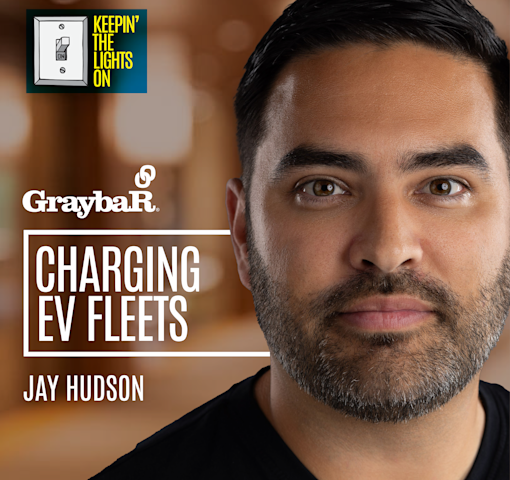
Charging EV Fleets with Jay Hudson

Guest: Jay Hudson
Released: May 7, 2024
listen on apple
listen on spotify
listen on audible
listen on youtube

Show Notes

EVs for personal use has seen steady growth over the past few years. One area we’ll begin seeing more growth in is EV commercial fleet use. There are many considerations a fleet manager must work through to transition from internal combustion engine (ICE) to electric vehicles (EV). Choosing the right vehicles, building out the right charging platform, and EV software selection are just a few of the challenges. Jay Hudson, Fleet Sales Director for Blink Charging joins me to talk through some ideas that will help a fleet manager make the change to EV.

Thank you for listening and please take a moment to subscribe, rate, and review our show on your favorite app. Also check our YouTube playlist

To get a hold of us here at Keepin’ The Lights On, please email: podcast@graybar.com
Reach Jay on LinkedIn

Learn more about Blink Charging

Salt Lick BBQ

Terry Blacks

Franklin BBQ

Unedited Transcript

00;00;06;07 - 00;00;27;06ToddObviously, electric vehicles have made a huge impact on the industry over the past few years. One aspect I hadn't spent much time thinking about is the use of EVs in commercial fleets, like service vans for contractors and large facilities. So I turned to Jay Hudson, fleet sales director for blink charging to share his insights into this side of the EV world.

00;00;27;09 - 00;01;01;04ToddJay is a fleet management expert with over 13 years of experience. For the last four years, Jay has focused exclusively on accelerating electric vehicle transitions by designing and executing complex plans to deploy turnkey charging infrastructure while minimizing any loss to operational efficiency and profitability. He is proud to lead the knowledgeable team of Blink Charging Sales and Solutions consultants dedicated to helping enterprise clients with large vehicle fleets and diverse real estate portfolios to meet their immediate and future electrification goals.

00;01;01;07 - 00;01;26;25ToddWelcome to Keeping the Lights On. I'm your host, Todd Reid, and on this podcast I connect with the owners and pros who design, build and maintain our electrical, communications and industrial world to explore the best ways forward. So as you know, Jay, we start out each episode with the meals that bring us together. So, Jay, if I were to I or any of the listeners were to visit you in your hometown, where might you take us and why would you choose this place?

00;01;26;27 - 00;01;53;24Jay HudsonMy hometown's Austin, Texas, and I would 100% take you to a place called Salt Lick Barbecue. It's kind of a staple here in the Austin area. It's been around for 40 odd years. it's, it's the best barbecue experience that you're likely to have when you come here to Texas. So I'd. What? I'd say that, taking folks to Salt Lake is, is something that I, I do for all friends and family that come into town.

00;01;53;26 - 00;02;00;12ToddYeah. Sounds great. So what's your favorite meal to get there? And you typically get the same thing every time you go.

00;02;00;14 - 00;02;25;05Jay HudsonYeah. Pretty much. I'm a big fan of, of brisket and turkey, so I'll do some ribs here and there. Their beef ribs are exceptional. but I would say like, their, their steady eddy. Go to items are your brisket and your turkey at Salt Lake with salt lake sauce. That's sometimes people know about Salt Lake before they've been there because they do have a line of sauces, kind of like Stubb's, which is also here in Austin.

00;02;25;07 - 00;02;35;17Jay HudsonLike you've heard of the barbecue sauce before you heard it, the barbecue joint. So, but you got to do it with, in my opinion, the spicy Salt lake, barbecue sauce.

00;02;35;19 - 00;02;57;12ToddSo a couple of things, stand out about Salt Lake. one, I was doing a little research, and it was actually brought up by a previous Austin guest. So which tells me I need to prioritize a visit to Austin and to Salt Lake. And I think there's probably 3 or 4 other places I could go, but so that that sound, I mean, and the picture I every time when I looked last time and I look this time, the pictures there they have that grill.

00;02;57;12 - 00;03;00;19ToddIt's huge in the middle and it's all the open pit.

00;03;00;22 - 00;03;16;22Jay HudsonYou can kind of like walk up, take pictures. You don't really get to see that in most barbecue places. It's usually behind the scenes there. Sometimes it's even done offsite. And they bring the barbecue from like one central kitchen to different locations. So it's kind of the the authentic experience. When you go to Salt Lake, which is pretty fun.

00;03;16;25 - 00;03;36;23ToddYeah, it looks amazing. So the second thing I noticed in is, that they're having a celestial barbecue party on April 8th, 2024. So I don't know when people are listening to this, but this is what I'm recording, so, I couldn't help but search to thinking about our topic of, electrical vehicles, EVs, solar and other generation methods.

00;03;36;23 - 00;03;57;06ToddAnd so, you know, in addition to multiple generation methods, there are different ways to EV, right? We're all familiar with personal family cars over the road. Trucking is starting to catch some steam boating. And even aircraft are starting to experiment with that. So but one area I really hadn't spent much time thinking about, was EVs and commercial fleets.

00;03;57;08 - 00;04;03;29ToddJay, can you share a bit on the current state of EV adoption in commercial fleets?

00;04;04;02 - 00;04;36;15Jay HudsonYeah, well, EV adoption commercial fleets, particularly in North America, is substantially far behind. any counterpart fleets in the European marketplace, mostly because of EV infrastructure. so where I work at Blink Charging, we're a manufacturer and, you know, network operator for EV equipment. And, right now the prevailing wisdom is or has been, quite frankly, for the last 30 years in the fleet industry is that if it doesn't make sense for your TCO, your total cost of ownership, you don't do it.

00;04;36;17 - 00;04;59;11Jay HudsonBut now we're at a, a point in the marketplace where companies, particularly operators of fleets, IT companies are getting downward pressure from corporate executives, from environmental groups, from interest groups, from, you know, consumers saying, hey, if we're going to be a customer of your company, we need to see that you're making efforts to, you know, help the environment decarbonize.

00;04;59;11 - 00;05;24;29Jay HudsonCall it what you want to call it. and so, with, with commercial fleets, with the exception of companies that are really at the forefront of the environmental, you know, in sustainability push within the commercial space, everyone's lagging behind, even if they are well intentioned, just because of a lack of infrastructure or a lack of, battery technology that can sustain the types of vehicles that they need to operate their fleets.

00;05;24;29 - 00;05;37;09Jay HudsonIt, it it peak capacity or Optima, like what we call fleet optimization. And so it's we're behind, in many ways. And that's really where, where companies like blank are trying to help folks catch up.

00;05;37;12 - 00;05;52;20ToddYour typical fleet manager, what are some of the risks that are in the front of their mind besides that that you mentioned as they consider a move from and I think you might have taught me this term Ice to EVs. So internal combustion engine to EVs. So ice to you.

00;05;52;22 - 00;06;17;07Jay HudsonYeah. So, you know, this is kind of the bread and butter of what I talk about with our customers every day is there's three major considerations that are kind of universal for fleet operators and managers. Number one is your financial risk. Two is your operational risk. And I actually I'd like to add a third in there just because I've been doing this for a number of years now with EV transitions, is your cultural risk.

00;06;17;09 - 00;06;43;25Jay HudsonSo financial risk is pretty straightforward. You're going to go from gas powered vehicles to electric vehicles. The prevailing wisdom in the marketplace today is EVs are substantially more expensive than their gas powered counterparts. Now, that has shifted over the last few years, and I don't expect every fleet manager out there to be an expert about that. But there are certainly circumstances where certain vehicles just make more sense to be gas vehicles at this point in time.

00;06;43;28 - 00;07;16;13Jay HudsonSo it's really about understanding where you're at and where you're trying to get to, so that you can create a plan and a financial picture that helps support whatever financial limitations or restrictions that you have inside of a business on their operational side. Can the vehicle get from point A to point B, carrying either people goods or providing services without minimizing without, the anxiety that can come from either range, anxiety or charging anxiety meaning like at point of charging anxiety.

00;07;16;15 - 00;07;39;03Jay HudsonSo those are two, you know, although they're very closely connected. Those are two separate things. And those are things that fleet managers have to work through in order to one confidently transition a particular vehicle or set of vehicles to EVs, without being concerned that they can't get the person good or service to the location that needs to be on to be profitable, to fulfill a service contract, so on, so forth.

00;07;39;05 - 00;07;59;24Jay HudsonAnd then the last one is, is the cultural shift. A lot of employees are afraid to get into an EV today because they know how a gas vehicle works. They know what their day to day work life is going to be like in the gas powered vehicle. They know that at the end of their route or their shift, if they needed to top up on gas, they're going to get home to their kid to go to baseball practice on time versus EVs.

00;07;59;24 - 00;08;24;26Jay HudsonThere's a fear factor or some concerns there. So a lot of the cultural adoption is isn't actually like the senior leaders of a business. It usually has to do with the drivers, the people that are actually behind the wheel. So those are all kind of the considerations that that, you know, we as experts in the industry have to work with our clients on, on breaking down those barriers and addressing those concerns when and where it makes sense to do it.

00;08;24;28 - 00;08;39;14ToddOkay. Other you know, there's some other roadblocks as far as like starting the process, like, you know, planning for how many vehicles I need. I mean, charging stations, I need all that. Yeah. There's some concerns there on the fleet managers part.

00;08;39;16 - 00;09;04;28Jay HudsonYeah. I would say number one is lack of expertise. Most fleet managers will point blank tell you that they aren't experts when it comes to EV, what I like to call EV ecosystems. Right. acquire the vehicle from the manufacturer, kind of the bread and butter of a fleet managers. traditional role responsibility evaluate vehicles. What has a better total cost of ownership?

00;09;05;01 - 00;09;32;17Jay HudsonPretty straightforward even for EVs. but then you start moving towards, having to figure out how to deploy that EV at scale. and to continually support that EV once it's in the field. And that could be a pretty scary proposition for a lot of fleet managers. so that's where a lot of hand-holding and over communication and not just like, hey, what's going on in the industry, but like, what are our customers in the industry that have already gone through this?

00;09;32;17 - 00;09;41;24Jay HudsonWhat are they experiencing and how can we help address some of those concerns upfront for different fleet managers and operators in the field?

00;09;41;26 - 00;10;02;00ToddOkay. and what about, when the actually comes to if they're which I assume many do, they start to put in their own, charging stations. you know, what are some things that can happen, like during that construction process that kind of throws them those, curveball or that they're worried about like that? yeah.

00;10;02;02 - 00;10;24;27Jay Hudsonnumber one is, have you talked to utility lately? how much power can you draw for a particular site? And what does that mean for not just your EVs, but also the impact that that has on your total metered energy for any particular location. So keeping the lights on and powering EVs have to be, you know, those aren't mutually exclusive propositions for any business.

00;10;24;29 - 00;10;45;29Jay HudsonSo you got to figure that piece out. so, you know, expertise, you know, starts with the vision, like, what are you trying to accomplish? And then you're typically you to go into a phase where you're gathering quotes, getting the information that you need from folks like us or others that, you know, know this stuff. then it comes down to making decisions.

00;10;46;01 - 00;11;09;08Jay HudsonBut decisions can also that you make can also be influenced by information that you find out later on, like how much is it going to cost to put in a 50ft trench in order to be able to support EV pedestals in the location that you currently park those vehicles, does it require a reassessment of that site as to where things get parked, or how things are set up operationally?

00;11;09;08 - 00;11;29;11Jay HudsonSo these are all things that most fleet managers have never had to consider before. So that's where working with partners like blank, like Graybar is going to help them to feel more confident in the decisions that they're making. so then you get your first sighting and everyone, you know, cuts a ribbon and it's all super exciting, right?

00;11;29;14 - 00;11;49;02Jay HudsonBut then the problem is, for larger organizations like yours or like mine, when you start to, scale up those projects and you go from one site to two sites to three sites, does the game plan change on a side by side basis? Does it not change? And so that's kind of like another area where we're helping clients.

00;11;49;02 - 00;12;12;03Jay HudsonAnd I just think the, you know, just take us out of it, like the industry in general is doing a much better job in trying to help folks see, that there are different ways of doing business, and different ways to reach that ultimate goal, which is productivity of the vehicles that you put in the field. you know, but it might not be exactly like you've done before, but that's not a bad thing.

00;12;12;03 - 00;12;14;22Jay HudsonWe just got to work to reach the options.

00;12;14;24 - 00;12;32;26ToddRight? Okay. So you kind of you started to touch on this, the word scalability. So, you know, I think about me putting in if I buy an EV, I need to put one in my house, a charging unit. That's could be complicated, but it's fairly easy because it's one. But a fleet manager man, they start to get multiple vehicles and you say they might decide to grow that fleet at some point.

00;12;32;28 - 00;12;41;26ToddSo you have multiple charging points. So can you maybe spend a little bit more time on the the challenges of Fleet Manager might face in regards to scalability?

00;12;41;29 - 00;13;11;27Jay HudsonYeah, yeah. geography of course, is going to play a role. you're right to bring up at home charging, for fleets that vehicles go home at night. There's two things that really have to happen. Number one, you have to choose a vehicle that is going to meet the requirements of that duty cycle for a vehicle. and most vehicles that tend to go home tend to be light duty vehicles, but they're pickup trucks or sedans, things like that.

00;13;12;00 - 00;13;36;27Jay Hudsonso most batteries today, not five years ago, but today are capable of, you know, anywhere from, let's call it 180 to 250 miles of range, unless we're talking about Rivian's, where you push up into the three hundreds things like that. generally more than enough for any duty cycle on a day to day basis. Or just think of the sheer number of hours somebody can even spend behind the wheel.

00;13;37;00 - 00;13;59;05Jay HudsonAnd so selecting that vehicle is actually before you even think about the equipment is super important. Next thing is, is there's at home charging depot charging and then charge public charging or what I like to call charging in the wild. In all three of those systems kind of have to talk to each other, right? a fleet manager needs to be able to assess what's charging at someone's house.

00;13;59;08 - 00;14;24;29Jay HudsonHow are they getting reimbursed for it, which is another hot button item across the fleet. Management discussion is is like you're drawing power from a person's house. Like it's like reimbursing them for a cell phone or internet bill. We just got to figure out. But the problem is with that problem. But the challenges at this moment is that unlike, say, reimbursing somebody for driving a gas vehicle, there aren't any federal rules like there are for that type of vehicle.

00;14;24;29 - 00;14;53;08Jay HudsonFor EVs. However, there are rules in European countries where blink is operating so we can provide best practice and options. But right now, it's like helping fleet managers figure out not just how to put a charger, the right charger, in someone's house that minimizes liability addresses privacy concerns. But also how do you reimbursement for that electricity? Depo charging is pretty straightforward, but the challenge of depot charging is it's pretty expensive to install for the very first time.

00;14;53;11 - 00;15;11;22Jay HudsonSo what options can partners like blink provide the marketplace? You know, is it ownership model? Is it a hybrid ownership model? Is it a, you know, public access where instead of everything behind the fence, we move the fence a little bit further back, and then we invite people to use those charging stations to offset some of those costs.

00;15;11;22 - 00;15;36;08Jay HudsonSo these are all different strategies that most companies have never had to think about before, that we're trying to assist them with with doing this because we're effectively building fueling stations in all the places where they garage vehicles, not to mention giving them access to charging in the wild, either on our network or on roaming networks. That kind of is a supplement to whatever they do at the depot or at home.

00;15;36;13 - 00;15;56;03Jay HudsonSo yeah, lots, lots of optionality. And we're just trying to create what I like to call an ecosystem. Like I mentioned earlier, that can help make it really clear and easy for a fleet manager to understand how we can get maximum vehicle efficiency based on the availability of charging infrastructure.

00;15;56;05 - 00;16;15;11ToddSo that's that's interesting. You, yeah. So so am I hearing you correctly? So if I owned by owned a fleet, or manage a fleet, and, you know, we have charging stations for our fleets on one side of our fence with some of them might be on another side of a fence, and I could actually charge the public to use those and kind of offset that cost.

00;16;15;11 - 00;16;16;16ToddIs that what I'm hearing you saying?

00;16;16;19 - 00;16;48;18Jay HudsonExactly. Yeah. It's possible. And not every company wants to do that. sure. But more companies than not are starting to look at the different options that are available to them. because if there's a way to monetize that use of electricity, by the general public or maybe even an employee, right. Like maybe you maybe you set up in the Blink Network that your fleet vehicles charge for free, your employees charged one are charged one rate because you want to give them maybe a preferred rate for them to charge their own fees.

00;16;48;20 - 00;17;08;21Jay HudsonAnd then the general public, you know, Joe Public, you know, sees that there's a, a station here, and you can have that completely shut off to the public, or you can have it set up so that they can engage in a charging session. But then you can determine, as a business owner or a business manager, what rates you're going to charge above your cost of electricity.

00;17;08;21 - 00;17;17;04Jay HudsonTherefore, there's a method for offsetting that initial investment into your infrastructure.

00;17;17;06 - 00;17;33;22Todda couple questions to one. I think the whole just so I like doing the show, I never even considered the thought of like, me bring it because a lot of people take their cars home, their fleet cars. And yeah, I want my company to pay for that electricity I'm using. I don't know, the. Yeah. And that's pretty awesome.

00;17;33;22 - 00;17;36;16ToddSo yeah, that's another thing hurdle to overcome.

00;17;36;16 - 00;18;01;00Jay HudsonSo yeah, it's not it's not something right now we're like I would say we're at the infancy stage of companies like ours and others figuring out how to do this. And it kind of comes down to the fact that we're in a pre regulatory environment like, you know, there's there's lots of rules and restrictions on how people are reimbursed for business mileage when they drive for work.

00;18;01;03 - 00;18;37;00Jay HudsonYou know, how people are reimbursed for the meals. You know that they, expenses that they incur as, as part of the business, but nothing like that exists yet for EVs. So we're using a lot of what we've learned from our, our friends and partners. it blanketed Europe, where, you know, Europe is ten years ahead of the US market in terms of EV penetration, in terms of just sheer volume of EVs and then EVs being utilized for business purposes, primarily because the vehicles in Europe tend to be a lot smaller than they are here in the US.

00;18;37;02 - 00;18;47;09Jay Hudsonbut that said, we're, we have those systems in place today. We're adapting those to the US market as quickly as, as commercial fleets will allow us to do it.

00;18;47;12 - 00;19;06;25ToddYou mentioned earlier you use the word infancy, and that, makes me think about kind of the technology. It's it's advancing pretty quickly, relatively speaking. And I'm curious to do fleet managers worry about mean I'm going to install this system and it's going to be out of date in a couple of years, and I have to do it all over again.

00;19;06;25 - 00;19;10;00ToddAnd I don't really want to do that. Is that a concern or.

00;19;10;03 - 00;19;24;01Jay HudsonI think so. And I think that also requires some education on the part of the marketplace. let me ask you a question, Todd. What do you think the average life cycle is of an EV level two charging station, or what should it be.

00;19;24;03 - 00;19;33;01ToddThe life cycle. So how long you can use one? I buy one net today. And how long should it last? I don't know, five years.

00;19;33;03 - 00;19;55;19Jay HudsonYou're actually pretty close. 4 or 5 somewhere in that range. which is good. The problem is, a lot of folks, when they look at EV charging stations, like they'll say, I get this all the time. Someone will tell me when I'm on a business call, business commercial fleet call. They'll say, hey, I pulled up to a blink charging station and the station wasn't working.

00;19;55;22 - 00;20;18;10Jay HudsonBlinks. Been around since 2009. There's what we call Gen one stations that are still in the ground because people bought that equipment and have decided that they either don't want to, you know, replace it for whatever reason, you know, and that could be a shopping center. It could be the multi-family housing complex. So, you know, they bought their equipment just like somebody buys an Apple iPhone.

00;20;18;10 - 00;20;40;13Jay HudsonAnd then what you do with it from then on out is kind of on you. But because it's got blinks name on it and it's visible to the general public, there's this perception out there that, oh, your stations don't work well. Every 4 or 5 years we go through this technological update. And the most the easiest example of this, you know, for me is 3G cell phone networks don't exist anymore.

00;20;40;21 - 00;21;14;14Jay HudsonIt's only 4G or better at this point. There were stations built a decade ago. They only have the capability of doing 3G, signals. Therefore, you gotta update your equipment in order to stay relevant, the same way that cell phone carriers have to update their equipment on an ongoing basis to serve their customers. So, you know, that said, those are kind of like the things that are going on in the marketplace where we're trying to help educate while at the same time continually update the infrastructure.

00;21;14;17 - 00;21;48;08Jay Hudsonand this is something with fleets. I'm very, very, sensitive to because I want to be able to get a maximum life cycle out of an EV's station. So ensuring that we're only recommending hardware for fleets, that are, I what's called ISO 1511 eight compatible. what does that mean? That means that when a vehicle plugs in to a station, that station can recognize the vehicle, which that's that's a technological advancement that Tesla broke through with only a few years ago.

00;21;48;10 - 00;22;20;03Jay HudsonNow we're bringing that same technology to fleets to one, improve the speed at which vehicles can be charged, without having to swipe an RFID card or use mobile app, which is it's a necessary evil in many cases. while at the same time being able to provide them with better data about what's going on with their fleet, vehicles, mileage, different data points that are like housed in the computer program and the computer terminal that's now being given to fleet managers to better manage their fleets the same way telematics data started doing this about 15 or so years ago.

00;22;20;03 - 00;22;31;28Jay HudsonSo, you know, we're trying to like, continually update while at the same time make as many recommendations as we can to help futureproof and get as much longevity out of the equipment as possible.

00;22;32;00 - 00;22;49;07ToddOkay. Yeah. And I, I don't know, I, I would imagine at some points just like iPhones, I mean, we get new iPhones occasionally, but they're not really, you know, they're not changing a whole lot. It's pretty incremental change. So I gotta think we might those like you think those life cycles will last longer at some point.

00;22;49;10 - 00;23;12;07Jay HudsonI do think it is some point in the future there. Well, we'll reach that kind of like equilibrium. It might not be your washer and dryer, and you might not get 15 or 20 years out of a station. But I do think we will get to a point where, the technology, both inside the vehicle and then the equipment used to charge the vehicle, improve such that it increased the longevity.

00;23;12;07 - 00;23;45;16Jay HudsonTherefore it minimizes the total, the investment upfront investment, capital expenses that figure into your TCO. So definitely something that I know fleet managers are looking forward to. on the battery technology side, which is aside from what we do at blank, most batteries today use what's called liquid crystal. like batteries, almost like think of like a battery that you have in your house, you know, battery acid, things like that's usually some type of liquid that maintains the life cycle longevity of that battery.

00;23;45;19 - 00;24;05;11Jay HudsonAnd in which case, right now, the kind of the hot thing within the battery tech world is solid state batteries. So they operate at lower temperatures. They have much larger capacities. There isn't one yet in a commercial vehicle, but there's a number of companies, that are working on that technology, and I'm sure they'll be selling it to some automotive manufacturer in the very near future.

00;24;05;11 - 00;24;28;03Jay HudsonBut those are things that are going to really reinvent the way that batteries accept, charge the rate at which they accept electricity. And so, it should be a pretty big game changer. I think once we hit that stage of, technical ability for the vehicles themselves, it'll create kind of like a settling within the EV marketplace where things aren't being replaced every 4 or 5 years.

00;24;28;05 - 00;24;35;15ToddTell me, imagine a world where EVs are a lot more ubiquitous in commercial fleets. What does that world and industry look like to you?

00;24;35;18 - 00;25;14;17Jay HudsonYeah, I think it's really the watershed moment in commercial fleets is when the batteries in charging technology charges have reached an efficiency and a cost point where medium duty, long range vehicles thinks you're box trucks in your, and you're, daily drivers. Right? Are like the technology is such that there's no difference between fueling and deploying a vehicle of a class three, four, or five.

00;25;14;19 - 00;25;37;22Jay Hudsonand that's really where you're going to start to see a massive shift in to over to EV because of the fuel savings. Right? Right. Now, the batteries and the infrastructure are too expensive to justify the fuel savings. And as those costs come down, the fuel savings is going to be what it is. And so, I think you'll start to see a big shift in, in commercial fleets once we hit that point.

00;25;37;22 - 00;26;07;09Jay HudsonRight now, the only fleets that can go majority electric are sedan and SUV fleets. You have some light duty truck fleets that are starting to do so as that availability of vehicles catches up, and the cost comes down, you'll in actually just sort of article, I think today on LinkedIn that said, the expectation is, is that it will cost the same to manufacture an EV of like or similar.

00;26;07;11 - 00;26;26;07Jay Hudsonconstruction isn't as an Ice vehicle, by around 2027. Now, if that's the case, we might see a larger shift sooner. But it all is kind of contingent on whether or not a battery can charge fast enough. It has enough capacity. for larger and medium duty vehicles, which kind of the bread and butter of most fleets?

00;26;26;07 - 00;26;29;17Jay HudsonAmerica.

00;26;29;19 - 00;26;36;21Toddyou mentioned Europe. You have an example of kind of how one a country that's kind of ahead of us and kind of what it looks like today.

00;26;36;23 - 00;27;02;27Jay HudsonYeah. so blink operates networks and works with fleets in primarily in the UK, Belgium, the Netherlands and France. And we're expanding there as well. it kind of comes down to the fact that the batteries that are used in those light duty vans, you know, if you're in the UK, they'll call it a caravan or a, what's the word that they use in the UK for a lorry?

00;27;02;27 - 00;27;36;29Jay HudsonYeah, a lorry. So, so lorries in, in Europe, we, you know, they have, you know, two 300 mile range, fully loaded capacity, batteries. so that kind of changes this dynamic quite a bit. Whereas as of this moment, the only mass produced lorry size or small mini, you know, small delivery van sized vehicle, that has that type of range is, is the Rivian's van that was originally manufactured exclusively for Amazon.

00;27;37;01 - 00;27;54;29Jay HudsonNow you have the mockups that you're seeing in the marketplace. I think, like AT&T and a few others have kind of like mockups of what their vans are going to look like when they get them. But the reality is, is that's the only van that's widely available, or at least mass produced in in North America, that's capable of competing with the European vans.

00;27;55;02 - 00;28;16;22Jay HudsonRam, Stellantis, as well as Mercedes-Benz will have a vehicle here in the US by the end of next year, 2025. It's already being operating pretty substantially in Europe, so it's just a matter of availability of the technology so that the van can get from point A to point B with the people, goods and services that it needs to sustain a business.

00;28;16;22 - 00;28;30;00Jay HudsonAnd so we're kind of that's really the only difference between us and Europe is kind of that level of commitment to rolling out that technology, more quickly and, in a more widespread fashion.

00;28;30;02 - 00;28;38;28ToddJ what's the best way for a fleet manager to start thinking about this topic? And you know, how to transition their fleet from Ice to EV?

00;28;39;01 - 00;29;03;02Jay HudsonYeah. When it comes to deployment management and performance management of of EV fleets is in my mind. There's five stages and I've kind of touched on a couple of them, but I'll just kind of for the sake of understanding where a fleet manager is in their journey, there's the vision stage, the planning stage, the initial deployment, the scaling up and the performance management in the fleet.

00;29;03;02 - 00;29;24;21Jay HudsonIn in a corporate fleet manager world, all virtually all of them are are have well oiled machines that are currently in the performance management stage, year in and year out, from acquisition of vehicles to cost management to disposal of vehicles. And then the whole process starts over again. let's introduce EVs and they're quite, you know, required charge.

00;29;24;21 - 00;29;48;10Jay HudsonRight. Where's it coming from? What's going to be the plan? How fast are we going to do it. Those are kind of like your overall guardrails your vision. Right. And then it's like planning is let's get quotes. Let's determine what's the best practice. Let's fill our expertise gaps. And then it's like okay, we got our initial installment. What are we going to do to make sure that this isn't just like one ribbon cutting.

00;29;48;10 - 00;30;18;00Jay HudsonAnd this can be replicated location, location after location and ultimately, how are we going to get from that initial installment to being able to confidently scale and then moving towards that stage where it's performance management the same way that it works for Ice vehicles today. So fleet managers are in, in my mind, in one, and I would love to hear any other fleet managers out there in the world that kind of like are thinking of other stages that they might be in or things that they're experiencing, but in general, they're in one of those five stages.

00;30;18;03 - 00;30;40;22Jay HudsonKey thing is, is get the right advice from the people that know the solutions from the installation. Are you are you working with installation partners that are experts in EV installation to ensure that it's going to, be able to sustain your fleet for well into the future versus an electrical contractor that's doing EVs on the side. are you using the right equipment?

00;30;40;24 - 00;31;03;10Jay Hudsonare you using the right charging solution for the duty cycle on the vehicle application? are you future proofing sites? You know, if it's if your site can support. I'm just going to use simple language 100 vehicles today and the goal is to make all 100 of those vehicles electric. Are you already having those conversations with your utility company?

00;31;03;10 - 00;31;23;08Jay HudsonYou know, you talking about panel upgrades, so you figuring out ways you know the and so that's like yeah, after that initial installment great. But like how do we get from 1 to 100 on a site. And then we do that 50 times over and so that's really where just filling that information gap and making sure that you have the right experts that you can rely on.

00;31;23;08 - 00;31;52;19Jay HudsonNumber one, and, you know, right now kind of just getting out there asking questions and, and talking to peers, because it's going to be the kind of the, the ability to, to kind of grow your, understanding of these things. It's ultimately going to give you, as a fleet manager, the confidence to go to the rest of the organization and confidently say, I have a plan now for meeting your goals as a business, because I have yet to meet too many fleet managers.

00;31;52;27 - 00;32;23;04Jay HudsonWho's who. They're the ones that are completely driving the EV adoption goals. It's usually someone or some constituency within the business. Sometimes it's sustainable. It's sometimes it's, you know, the C-suite, sometimes it's, you know, consumer affairs, like, but, but ultimately, like, it's they're going to own it. If the, if the vehicle doesn't get from point A to point B, regardless of whose idea was before it went on the road, the fleet manager in the back of their minds are always going to be thinking they're going to blame me for that happening.

00;32;23;04 - 00;32;32;12Jay HudsonSo what do I, as an expert in this industry, have to provide them with to make them feel confident about that decision to transition on a vehicle by vehicle basis?

00;32;32;15 - 00;32;43;21ToddWe touched on TCO or total cost of ownership can be less, I think, for EVs. What what are ways that this can manifest in EV fleets?

00;32;43;24 - 00;33;11;09Jay HudsonYeah. Great question. number one is, and this is a little bit of a wild card, I will say. So the prevailing wisdom in the marketplace today is because an EV doesn't have an engine, and all of the moving parts that come with an engine that the life cycle of an EV should be substantially longer than a gas powered vehicle.

00;33;11;12 - 00;33;40;11Jay Hudsonkind of the one indication that this might be the case is kind of the industry leading, warranties for for powertrains or anything related to your engine or the systems that kind of make the wheels move. those are typically about maximum, five years. most EV manufacturers today, they're kind of first go at warranting what's called a propulsion system, not a powertrain.

00;33;40;13 - 00;34;10;09Jay Hudsonis at minimum about eight years. So we've already started to see the manufacturers themselves kind of create signals in the marketplace that we're expecting these vehicles to go longer. If a vehicle goes longer, you can spread your depreciation out over a longer period of time, thereby lowering your single largest expense related to your TCO. Your second largest expense is gas on a nice vehicle.

00;34;10;11 - 00;34;44;24Jay HudsonYou've just eliminated that expense line and replaced it with electricity. It's going to be dependent on what market you're in and what size vehicle there is. But in general, and I'll just use a super round number, most of the, projections that we use very conservatively is that electricity costs about 60% less than gas does. And so even using that conservative number, you spread your depreciation, you reduce your fueling expense mile by mile by 60%.

00;34;44;26 - 00;35;28;25Jay HudsonYou're building a pretty compelling case for EVs, provided that you figured out a way to minimize your spread, your expense when it comes to charging infrastructure requirements. And so those are the types of things where we're working really closely with our clients as well as our partners. Because we have automotive manufacturing partners, we have dealership partners, we have commercial truck partners in kind of keeping an eye on these trends and how it's ultimately impacting the fleet manager's perception of these expenses and ultimately, what's going to then once they make that leap, how do we track those expenses to say, yeah, here's the model that we've built for you.

00;35;28;26 - 00;35;30;26Jay HudsonHow are we doing?

00;35;30;28 - 00;35;38;10ToddI'm a driver in a fleet, and I have to carry my expense card or my fuel card or all that stuff. Is that kind of help, that kind of whole workflow, or is that okay?

00;35;38;10 - 00;36;21;14Jay HudsonSure does. Yeah. I can tell you, Todd, our our vision here at blank is to create frictionless fleet EV deployments. where there's a plan for infrastructure, whether that's on your property at a person's home or, in the wild. There's a plan for how that person charges either on a vehicle, you know, their vehicle, either in a blink station or a home station depot station where they plug in, it, authenticates it, gives the fleet manager all the data that they need to know that battery life, you know, battery health, all the things that, like, are different about running an EV fleet can come through just that simple plug, that simple connection.

00;36;21;14 - 00;36;43;14Jay HudsonExcuse me. And that's really going to be one of those as we continue to build out that product set with, you know, I mentioned earlier about using equipment like we hear blank only advocate for equipment that is, going for fleet applications. That is is 4G wireless or greater enabled versus wireless. Why? Because there's a lot of privacy concerns that are raised.

00;36;43;14 - 00;37;05;14Jay HudsonLike if you're going to tell an employee you're going to install an EV charging station in their home for business use because they park a fleet vehicle in their garage every night. One of the first questions you say, when is why do you need my Wi-Fi password? What does that have? What does that have to do? So it's choosing equipment that doesn't need that type of connection to minimize privacy concerns.

00;37;05;14 - 00;37;27;00Jay HudsonYou know, there's another reimbursement issue that you may or may not have avoided. So those are just the types of things where like blinks going to make some of those decisions for fleet managers beforehand so that when they go to deploy these assets, at different locations, we're minimizing the amount of friction that's created every time that a vehicle goes into service.

00;37;27;02 - 00;37;41;21ToddOkay. Well, Jay, we're nearing the end of our conversation. I like to close them by refocusing on the why of what we do. So what motivates you to do this work day in and day out? What keeps you excited and passionate about what you do?

00;37;41;23 - 00;38;12;07Jay HudsonYeah, I've been now, I've been in fleet and mobility solutions virtually my entire career, specifically focused on the EV transition for the last three, almost four years. something about creating a marketplace where it doesn't exist today in that marketplace being more efficient than the one that it's replacing when it reaches its kind of its critical mass is really, really exciting to me.

00;38;12;07 - 00;38;47;26Jay HudsonSo, the general, opinion in the marketplace today is that the EV adoption within commercial fleet and government fleet applications, it's too early. and there are very clear examples of that not being the case. And I really love being able to take that information, and confidently present it to operators who then are able to confidently, you know, present it to business leaders who are then confidently able to, present it to investors and consumers.

00;38;47;28 - 00;39;05;16Jay HudsonAnd, and it's in a way where we're doing something, it's like building a rocket and going to the moon, one vehicle at a time. So that's what I really love about working in Flink and more broadly within the EV, charging hardware and vehicle space.

00;39;05;19 - 00;39;17;19ToddYeah. That's great. So, yeah, I mean, you you've taught me a lot about kind of just TV in general. And even fleet was, again, something I hadn't really thought a whole lot about. So I really appreciate that. It's been great having you on the show and I appreciate your time. Thank you.

00;39;17;21 - 00;39;20;17Jay HudsonThanks, Todd. Appreciate you all.

00;39;20;19 - 00;39;38;29ToddThat was my conversation with Jay Hudson, Fleet Sales director for Blink Charging. You can connect with Jay and what he's working on by heading to the links in the show. Notes. If you enjoyed this episode, you can help us grow this show by subscribing and leaving a five star rating in your favorite podcast player. Thanks for listening to this episode of Keeping the Lights On.

00;39;39;01 - 00;39;39;28ToddWe'll see you next time.

More Podcasts Episodes

All Episodes
Streamline EV Network Projects
PodcastOct 27, 2025
Streamline EV Network Projects
10 Surprising Things That Impact Your Lighting with Lisa Reed
PodcastOct 21, 2025
10 Surprising Things That Impact Your Lighting with Lisa Reed
Keepin' AI Systems Cool with Bob Wagner
PodcastOct 7, 2025
Keepin' AI Systems Cool with Bob Wagner
Natural Laws of Business
PodcastSep 23, 2025
Natural Laws of Business